All Categories
Featured


SOCAL Green Analytics for Commercial Owners
Table of Contents
Active execution of Oregon's program started in 2025, while the state law likewise dealt with legal challenges that will continue well into 2026. Businesses operating in or offering into states with new or anticipated packaging EPR laws will need to keep an eye on these developments, including the Oregon litigation, which may have implications for other states' programs.
Carefully connected to EPR are requireds for minimum recycled content that need particular percentages of recycled materials in product packaging, especially plastic product packaging, by particular dates. Such requireds are on the increase, including in multiple U.S. states and under the EU's PPWR, which will largely go into result on August 12, 2026.
Circular economy advancements such as these will continue to challenge companies to exceed fundamental compliance and shift towards vital technique development to construct functional resilience. The large volume of needed ESG information management and analysis has surpassed manual processing and basic spreadsheets for numerous business. In 2026, leading legal and sustainability teams are embracing or preparing to embrace agentic AI systems to handle compliance and automate XBRL tagging for digital filings.
Top Strategies for ESG Compliance in Commercial Greenspaces
: Tracking AI tools utilized in the "social" pillar (such as hiring or supplier selection) to guarantee they do not replicate historical predispositions, which might trigger disparate effect claims.: Using AI to identify and assess ESG and sustainability marketing claims and cross-reference them against suitable requirements and real-time supply chain data to avoid greenwashing accusations.
Commercial Landscaping Fountain ValleyMore usually, businesses will continue to be challenged to show strong AI governance through combined governance architectures. This publication is meant for basic informational purposes only and does not constitute legal advice or a solicitation to provide legal services. The details in this publication is not planned to create, and receipt of it does not constitute, a lawyer-client relationship.
The views and viewpoints revealed herein represent those of the individual author(s) just and are not always the views of Clark Hill PLC or Clark Hill Solicitors LLP. Although we attempt to make sure that posts on our website are total, precise, and up to date, we assume no duty for their efficiency, precision, or timeliness.
What does the future of landscaping appear like when water can no longer be taken for granted? As water deficiency continues to shape California's landscapes, the method we develop, plant and construct requirements to develop. At FutureScape U.S.A., join our panel for Waterwise by Style: Rethinking Gardens for the Future Environment, a conversation exploring how we can develop stunning, resilient landscapes while utilizing considerably less water, and even none at all.
Why Water-Wise Landscapes Improve Commercial ESG Scores
September 1, 2026 1:00 PM Barker Hangar, Santa Monica The climate is altering. How we design for it has to alter too.
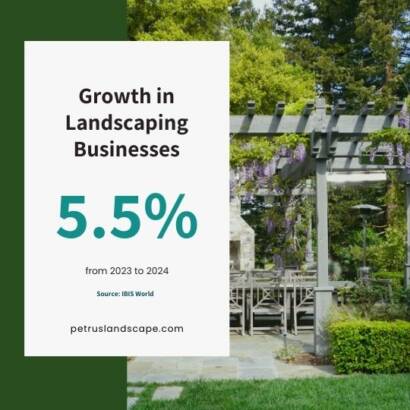
The Landscaping Solutions market in the United States runs under the NAICS market code 56173. This industry primarily supplies landscape care and maintenance services, consisting of planting trees, shrubs, flowers, yards or gardens. Industry business might likewise design landscape strategies or construct sidewalks, maintaining walls, decks, fences, ponds and comparable structures.
Related terms covered in the Landscaping Solutions industry in the United States consist of yard service, shrub service, tree service, outsource, arborist, pesticide, herbicide, mulch and fertilizer. Products and services covered in Landscaping Solutions industry in the United States consist of Upkeep and general services, business, Maintenance and general services, domestic and Design-build-installation services.
The Evolution of Commercial Maintenance Via ESG
The Efficiency chapter covers comprehensive analysis, datasets, in-depth present performance, sources of volatility and an outlook with projections for the Landscaping Providers market in the United States. Concerns addressed in this chapter include what's driving present industry efficiency, what influences industry volatility, how do successful companies overcome volatility, what's driving the market outlook.
The Products and Markets chapter covers in-depth services and products division and analysis of significant markets for the for the Landscaping Services industry in the United States. Concerns addressed in this chapter consist of how are the industry's services and products carrying out, what are developments in market product or services, what services or products do effective companies offer and what's affecting demand from the industry's markets.

Latest Posts

Is the Landscape Strategy Meet New ESG Goals?

Modern Commercial Real Estate Maintenance Strategies

Evaluating Traditional Vs. Sustainable Maintenance ROI